
VB/VPB-139 (Bombing Squadron 139)
U.S. Navy Bombing Squadron VB-139 (later-VPB-139) operated Lockheed PV-1 Ventura and PV-2 Harpoon aircraft in the Aleutian and North Pacific theater, conducting long-range patrol, reconnaissance, and strike missions from 1943 to 1945.

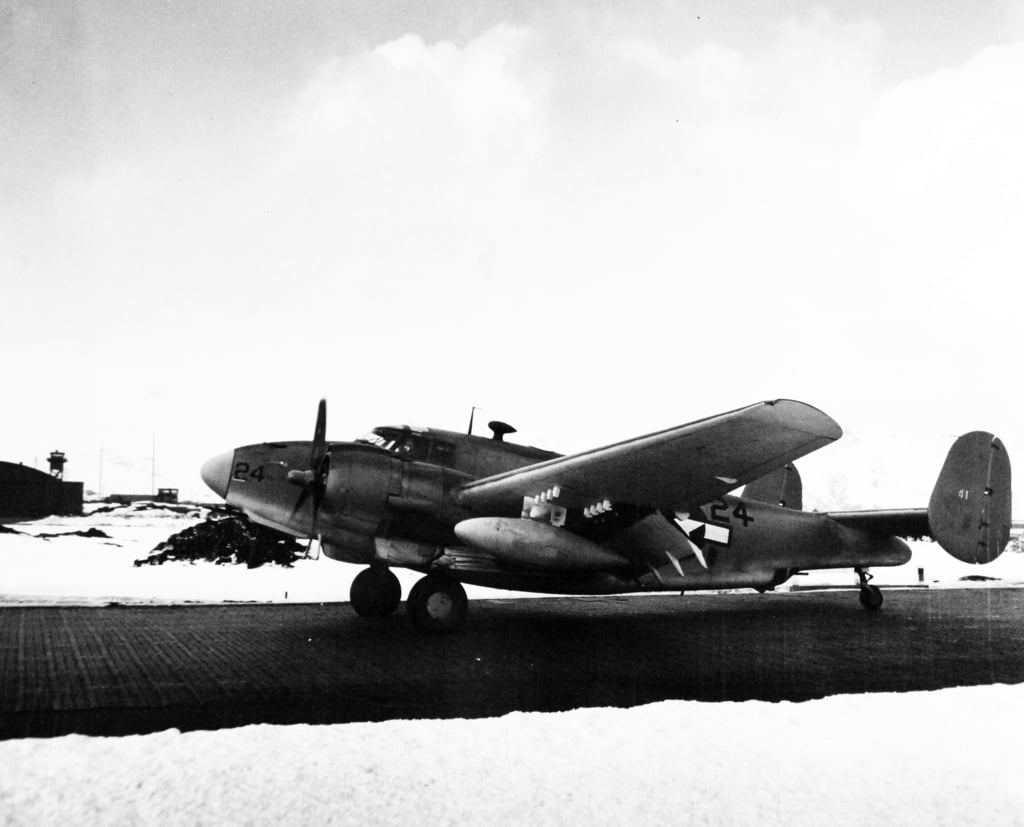
Overview
Bombing Squadron VB-139 was established on 1 April 1943 at NAS Ault Field, Whidbey Island, Washington, as a medium bombing squadron equipped with the Lockheed PV-1 Ventura. Following an intensive period of training and equipment modification on the West Coast, the squadron deployed to the Aleutian Islands in October 1943, where it entered combat under Fleet Air Wing FOUR (FAW-4).
Operating from forward bases including Amchitka, Adak, and ultimately Attu (Casco Field), VB-139 carried out routine long-range search missions over the North Pacific as well as photographic reconnaissance and bombing strikes against Japanese-held positions in the Kurile Islands. Missions were frequently constrained not by enemy resistance but by severe weather—fog, icing, and unpredictable winds—which constituted the most persistent and dangerous adversary faced by the squadron.
VB-139 played a significant role in extending U.S. Navy PV-1 operations into the Kuriles, demonstrating that the aircraft could conduct long-range strike and reconnaissance missions previously considered feasible only for B-24 and PBY aircraft. The squadron later returned to the United States, re-equipped with the improved PV-2 Harpoon, and completed a second Aleutian deployment before being redesignated VPB-139 and ultimately disestablished in September 1945.
Quick Facts
Unit: Bombing Squadron 139 (VB-139), later VPB-139
Service: United States Navy
Established: 1 April 1943
Disestablished: 13 September 1945
Primary Aircraft: Lockheed PV-1 Ventura; later PV-2 Harpoon
Theater: Aleutian Islands / North Pacific / Kurile Islands
Operational Control: FAW-6 (training), FAW-4 (combat)
Primary Bases:
- NAS Whidbey Island (Ault Field)
- NAF Amchitka
- NAS Adak
- NAS Attu (Casco Field)
Mission Types during “Empire Express” operations:
- Long-range search and patrol
- Photographic reconnaissance
- Bombing and strike missions
- Anti-shipping attacks
Aleutian Service – Two Combat Tours
First Aleutian Tour (October 1943 – June 1944)
VB-139 deployed to the Aleutians in early October 1943, arriving at Amchitka in three detachments and quickly assuming routine search responsibilities. Initial operations consisted largely of long-range patrols extending 350–550 miles over the North Pacific.
By December 1943 the squadron had relocated to Attu (Casco Field), replacing VP-136 and establishing a forward base for operations against the Kurile Islands. From January 1944 onward, VB-139 began “Empire Express” missions, conducting photographic reconnaissance and bombing missions over Japanese Kurile Islands, as well as attacks on picket vessels encountered at sea.
Despite limited enemy interception, operational hazards were severe. Icing, fog, and unpredictable weather frequently jeopardized missions and recoveries. Several aircraft were lost in accidents or operational incidents, particularly during takeoff and landing on ice-covered runways.
The tour concluded in June 1944, when VB-139 was relieved and returned to NAS Whidbey Island.
Second Aleutian Tour (April- September 1945)
After reorganization and re-equipment at Whidbey Island, VB-139 transitioned to the improved PV-2 Harpoon, incorporating enhanced range and ordnance capability. Training emphasized rocket attacks, instrument flying, and the use of Ground-Controlled Approach (GCA), a critical advancement for operations in the fog-bound Aleutian environment.
Redesignated VPB-139 on 1 October 1944, the squadron returned to the North Pacific in early 1945. While large-scale offensive operations in the Kuriles had diminished compared to 1944, the squadron continued patrol, strike readiness, and operational support missions in the region.
This second tour reflected a transition phase in the air campaign, with improved equipment and navigation systems reducing operational risk, though the Aleutian weather remained a constant hazard.
Combined Operational Highlights
- PV-1 deployment to the Aleutians with forward basing at Attu, enabling sustained operations against the Kurile Islands
- First “Empire Express” missions, demonstrating extended operational capability, previously thought achievable only by B-24 and PBY aircraft
- Adaptation to extreme weather conditions, including icing, fog, and limited visibility recovery environments
- Transition from PV-1 Ventura to PV-2 Harpoon, introducing rocket strike capability
- Adoption of Ground-Controlled Approach (GCA), significantly improving recovery safety in Aleutian fog conditions
- Participation in rocket and strafing attacks against Kurile targets in early 1945
- Operational limitations imposed by PV-2 airframe structural issues, restricting high-G attack profiles
- Demonstrated adaptability in shifting from offensive strike operations to long-range patrol and reconnaissance missions
Operational Characteristics
VB-139 operations were defined less by direct combat engagement and more by environmental and logistical challenges:
- Weather was the primary operational hazard, often preventing missions or endangering recovery
- Runways were frequently covered in snow and ice, contributing to multiple takeoff and landing accidents
- Navigation over long distances (up to ~750 miles to the Kuriles) required precise fuel management and decision-making
- Crews routinely faced uncertain return conditions, including fog-covered airfields
Losses and Risk Environment (Summary)
VB-139 sustained a number of aircraft losses during its Aleutian operations, many occurring during takeoff or landing under hazardous conditions.
These events underscore the dual threat faced by the squadron: operational demands at extreme range combined with unforgiving environmental conditions.
Legacy
VB-139 represents a key component of the U.S. Navy’s North Pacific air campaign, bridging the gap between long-range patrol aviation and medium bomber strike capability in one of the most challenging operational theaters of World War II.
Its experience highlights the evolution of naval aviation doctrine in remote environments and the critical role of adaptability, navigation, and weather mitigation in sustained air operations.